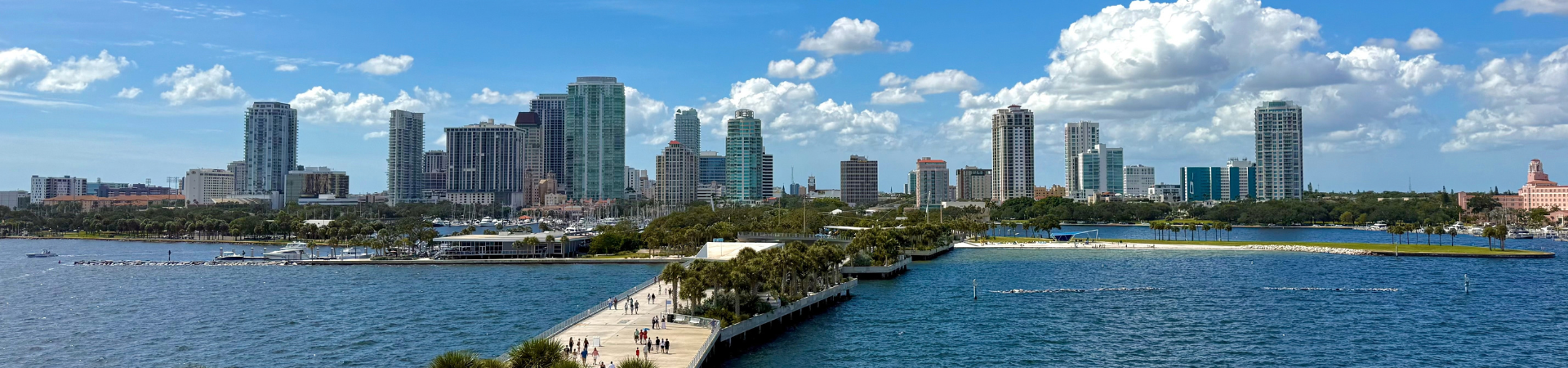
Florida continues to strengthen its position as one of the world’s most dynamic economies. With an economy valued at approximately $1.8 trillion, Florida now ranks as the 14th-largest economy in the world, surpassing countries including Australia and Mexico. The state’s economy grew 6.3% over the past year, reflecting continued business investment, job creation and population growth.
For Florida residents, that economic strength reaches well beyond the numbers. A growing and diversified economy can create more opportunities for businesses, workers and families, while continued investment can support communities across the state.
Florida’s appeal to businesses and new residents remains an important part of that story. The state ranks No. 1 nationally for new business startups, new business migration and net income migration, according to the Florida Chamber Foundation. These trends point to continued interest in Florida as a place to build a career, start a business, invest and put down roots.
What Does a Strong Economy Mean for Real Estate?
Real estate is closely connected to the broader economy. As businesses expand and people move to Florida for employment and lifestyle opportunities, demand for housing can follow. New residents need homes, businesses need commercial space, and growing communities require continued investment in infrastructure, services and amenities.
Real estate itself is also a major contributor to Florida’s economy. Recent research from the National Association of REALTORS® found that real estate accounts for more than one-quarter of Florida’s GDP, making it the largest share of any state in the nation. The industry contributes hundreds of billions of dollars to the state’s economy, demonstrating just how closely Florida’s economic health and real estate markets are connected.
For buyers, Florida’s economic momentum can be an encouraging sign of the state’s long-term appeal. For sellers and homeowners, continued economic activity can help support demand over time. And for investors, population growth, business expansion and ongoing development can create opportunities across different areas and property types.
Of course, a strong economy does not mean every real estate market will move in the same direction. Interest rates, affordability, inventory and local market conditions continue to influence buying and selling decisions. Florida’s housing market is currently moving through a period of normalization after several years of rapid growth, creating a market where local knowledge and careful analysis remain especially important.
Florida’s rise to the world’s 14th-largest economy is ultimately more than an impressive statistic. It reflects the continued growth, investment and opportunity taking place across the state. As Florida’s economy evolves, its real estate market will remain an important part of that story.


Responses